
C-Section Recovery
Sort by
C-Section Recovery Must-Haves: 2 Essentials That Actually Speed Healing
You just did something incredible. Now comes c section recovery, when the right tools and fuel make a real difference in pain, mobility, and healing. Below, you'll build a targeted c section recovery kit (not a bloated shopping list) and learn exactly what to eat after c-section for fast recovery, with protein, fiber, hydration, and micronutrients that support tissue repair. Expect practical, medically aligned guidance. For reference, typical c section recovery time is about six weeks, though your OB's guidance always comes first.1,2
Key Takeaways
- A targeted c section recovery kit including pillows, a soft abdominal binder, and high-waist seamless underwear supports comfort and protects your incision while promoting mobility.2,3
- Prioritize adequate protein intake to support tissue repair and healing after your c-section.4,5
- Incorporate fiber along with plenty of hydration each day to help prevent constipation and reduce straining during recovery.2,4
- Use the recovery kit to create a "recovery triangle" setup that minimizes twisting and bending, helping make early healing easier and more comfortable.2
- Include micronutrients like vitamin C, zinc, iron, and omega-3s in your diet to support collagen synthesis, immune function, and energy metabolism.5
- Follow your OB's guidance closely on recovery timing, activity, binder use, and when to seek medical attention for concerning symptoms such as fever, worsening pain, redness, or drainage.1,2
1. Build Your C-Section Recovery Kit: Pillows, Binder, High-Waist Undies, And Smart Comforts
The best c section recovery kit keeps staples within reach and protects your incision while you move, feed, and rest. Focus on comfort that reduces strain, and on small tools that prevent painful twisting or bending.2
Pillows That Protect Your Core and Position You Well
- Wedge pillow: Slight incline may reduce strain when getting up. Use it behind your back in bed or on the couch so you can log-roll to stand instead of crunching your abs.
- Nursing/feeding pillow: Brings baby to you (not the other way around). Helpful for pressure-free feeds and bottle sessions.
- Small abdominal "hug" pillow: Hold against your incision when coughing, laughing, or standing. It can help reduce the tugging sensation.
Pro tip: Stack two regular pillows at your sides. Slide one under the knees to relax your lower back, and keep one for splinting your abdomen when you shift.
Abdominal Binder: When and How to Use It
A soft, adjustable postpartum binder can provide gentle support as you walk, stand, and transition in and out of bed. Evidence is mixed but generally supportive for comfort and early functional mobility after cesarean delivery.3
- How to wear: Position it low and snug over high-waist underwear, not directly on skin, and not so tight that breathing is restricted.
- Timing: Some people find it most useful in the first 2–4 weeks during upright activity, depending on comfort and clinician guidance.2
- Safety: If you notice increased pain, numbness, or redness/irritation, stop and ask your OB. Avoid if your clinician advises against it.
High-Waist, Seamless Underwear (and Soft Layers)
Look for high-waist, breathable, seamless underwear that rides well above the incision. They help avoid waistband friction and can help hold pads in place. Add a soft, front-opening nightgown or loose joggers and a drapey cardigan for easier dressing with less twisting.
Smart Comforts That Make Movement Safer (and Less Painful)
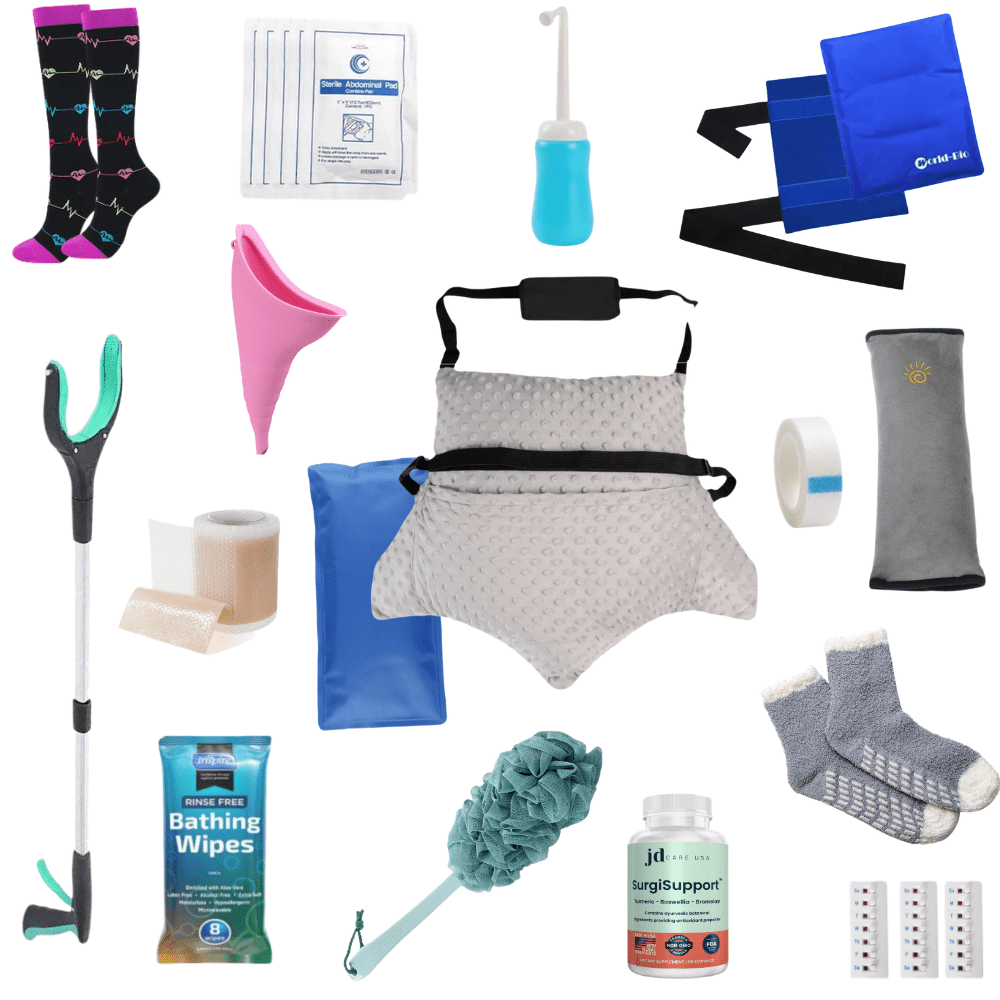
- Long phone charger + bedside caddy: Keeps necessities within reach, reducing twisting.
- Grabber/reacher tool: Pick up burp cloths or pacifiers without bending.
- Slip-on shoes with firm soles: More stable and easier than dealing with laces while sore.
- Peri bottle and fragrance-free wipes: Gentle hygiene can be easier during early recovery.
- Stool softener (if your doctor approves): Can help prevent straining when paired with fluids and fiber.2
- Compression socks (if recommended): May help with swelling on days you're more upright.
- Silicone scar sheets or gel (only after the incision is fully closed and cleared by your provider): May help improve scar appearance and comfort later in healing.
- Ice or heat: Ice may help with localized swelling and tenderness around, not on, the incision in the early days; gentle heat may help relax back or shoulder tension. Avoid direct heat on the incision unless cleared by your provider.
Minimalist Checklist You'll Actually Use
- Incline/wedge pillow
- Feeding pillow + small "hug" pillow for bracing
- Soft abdominal binder (approved by your clinician)
- High-waist, seamless cotton underwear (5–7 pairs)
- Bedside caddy, long charger, water bottle
- Peri bottle, gentle wipes, maxi pads
- Slip-on shoes, reacher tool
- Provider-approved stool softener; fiber-rich snacks
- Optional after healing: silicone scar sheets/gel
Use these intentionally: set up a "recovery triangle" between your bed or couch, bathroom, and baby station, with duplicates of the basics. The less you rotate and bend, the less you may irritate your core in the first days and weeks.2
JD Care USA has put together a C-section recovery kit for your convenience. It is a great gift for your partner, friend or family member who just delivered their bundle of joy.
2. What To Eat After C-Section For Fast Recovery: Protein, Fiber, Hydration, And Micronutrients
Here's what to eat after c-section for fast recovery, in order of impact: prioritize protein, anchor meals with fiber and color, drink fluids regularly, and include key micronutrients that support normal tissue repair and energy metabolism. If you're breastfeeding, many people need roughly an extra 330–400 calories per day, though individual needs vary and your OB or IBCLC's guidance should come first.4
Protein: The Building Block for Tissue Repair
- Target: Aim for adequate daily protein intake. The general adult RDA is 0.8 g/kg/day, and recovery from surgery can increase practical protein needs, so many clinicians encourage building meals around protein-rich foods.5,6
- Why: Protein provides amino acids needed for tissue repair, muscle maintenance, and immune function.6
- Easy options:
- Greek yogurt with berries and chia
- Eggs on whole-grain toast with avocado
- Rotisserie chicken or lentil/bean bowls
- Cottage cheese, edamame, tuna/salmon packets
Fiber + Gentle Carbs: Combat Constipation and Support Energy
Your core is recovering, so straining is the enemy.
- Target: Many adult women should aim for about 25 g fiber per day, increasing gradually and pairing it with plenty of fluids.5
- Sources: Oats, prunes, pears, berries, lentils, chickpeas, chia, ground flax, vegetables, and whole grains.
- Pair with gentle carbs such as oatmeal, rice, potatoes, or whole-grain toast for easy energy, especially if breastfeeding.4
Hydration and Electrolytes: Keep Fluids Simple and Steady
- Target: Drink regularly through the day. Fluid needs vary, and lactation increases needs; many breastfeeding women require substantially more total fluids than non-lactating adults.4,5
- How: Keep a marked water bottle at your bedside and refill it consistently.
- Add electrolytes if you're sweating heavily, nursing frequently, or feeling lightheaded, based on clinician advice.
Micronutrients That Matter for C Section Recovery
- Vitamin C (citrus, strawberries, bell peppers): Supports normal collagen formation and wound healing.6
- Vitamin A (sweet potatoes, carrots, spinach): Supports epithelial repair and immune function.6
- Zinc (beef, pumpkin seeds, beans): Important for wound healing and immune function.6
- Iron (red meat, lentils, spinach, plus vitamin C to help absorption): Important after blood loss and for red blood cell production. If you're prescribed iron, follow dosing instructions carefully.1,6
- Omega-3s (salmon, sardines, DHA-fortified eggs, algae oil): Important for overall maternal nutrition during the postpartum and lactation period.6
- B12 and Folate (eggs, dairy/meat or fortified plant milks, leafy greens, legumes): Support red blood cell formation and normal energy metabolism.6
Quick Build-Your-Plate Formula
- Start with protein.
- Add 2 fiber-rich sides (fruit + veg, or veg + whole grain).
- Include healthy fats such as olive oil, avocado, or nuts.
- Drink water alongside.
1-Day Healing Meal Map (Prep-Light)
- Breakfast: Oatmeal cooked with milk, topped with Greek yogurt, blueberries, and ground flax.
- Snack: Apple + peanut butter; or cottage cheese + pineapple.
- Lunch: Whole-grain wrap with rotisserie chicken (or hummus + chickpeas), spinach, shredded carrots; side of strawberries.
- Snack: Edamame or a protein smoothie (milk, banana, spinach, chia, protein powder if you use one).
- Dinner: Baked salmon (or lentil loaf), roasted sweet potatoes, broccoli with olive oil and lemon.
- Before bed: Prunes or prune juice if constipation is an issue, if tolerated.
Foods to Limit (Especially in Week 1–2)
- Ultra-processed snacks that crowd out protein- and fiber-rich foods.
- Foods that worsen gas or discomfort for you personally during the early days.
- Alcohol, especially while using pain medication and if breastfeeding, unless your clinician says otherwise.4
Small, Real-World Tweaks That Pay Off
- Batch protein: Shred rotisserie chicken or bake tofu for 2–3 days of faster meals.
- Keep easy snacks nearby so you can eat regularly.
- Constipation combo: Daily fiber + fluids + short, frequent walks, as approved by your clinician, often work better together than any one step alone.2
Eating this way aligns with c section recovery basics: enough protein and micronutrients to support healing, plus fluids and fiber to help avoid straining. Keep it simple and consistent rather than perfect.
Other Recovery Kits:
Conclusion: C-Section Recovery Time And How To Use These Must-Haves For A Smoother First 6 Weeks
Most people feel meaningfully better by 2–3 weeks and reach a more typical recovery point around six weeks, but recovery varies and your OB's guidance rules. Use your recovery kit daily to reduce strain, protect the incision, and keep essentials close. Eat for healing with protein at meals, fiber and fluids for comfort, and targeted micronutrients. In the first couple of weeks, go slow and walk short distances as advised; call your clinician promptly if you develop fever, worsening pain, redness, drainage, or worsening swelling.1,2
C Section Recovery Must-Haves: Frequently Asked Questions
What are the essential items to include in a c section recovery kit?
Your c section recovery kit should include pillows for core support, a soft abdominal binder, high-waist seamless underwear, a bedside caddy with a long phone charger, a peri bottle with gentle wipes, slip-on shoes, and provider-approved stool softeners to ease recovery.2,3
How does an abdominal binder assist during c section recovery?
An abdominal binder may offer gentle support during walking and standing, and some evidence suggests it can help reduce pain and improve mobility after cesarean delivery. It should not be tight enough to restrict breathing, and it should be used according to your clinician's advice.3
What should I eat after a c section for fast recovery?
Focus on protein-rich foods such as Greek yogurt, eggs, legumes, fish, or lean meats to support tissue repair, along with fiber-rich fruits and vegetables, regular hydration, and nutrient-dense foods that provide vitamin C, zinc, iron, and other key micronutrients.4,5,6
Why is fiber important during c section recovery?
Fiber helps reduce constipation and straining, which can make recovery more uncomfortable after surgery. Pair fiber-rich foods with adequate fluids for best effect.2,5
When can I expect to feel better after a c section and how should I use these recovery must-haves?
Many people start feeling significantly better within 2–3 weeks, with broader recovery often taking around six weeks or longer depending on the person and the surgery. Use your recovery tools daily to reduce strain, protect your incision, and support gentle movement as advised.1,2
Are there any foods or habits to avoid during the first two weeks of c section recovery?
Try to limit foods or habits that worsen constipation, dehydration, or discomfort for you personally. Avoid alcohol while using pain medication and check with your clinician about any supplements or over-the-counter products during recovery and breastfeeding.4
References
- American College of Obstetricians and Gynecologists (ACOG). Optimizing Postpartum Care. Available at: https://www.acog.org/clinical/clinical-guidance/committee-opinion/articles/2018/05/optimizing-postpartum-care
- NHS. Caesarean section - Recovery. Available at: https://www.nhs.uk/tests-and-treatments/caesarean-section/recovery/
- Karaca I, Yüksel A, Demirci O, et al. Influence of Abdominal Binder Usage after Cesarean Delivery on Postoperative Pain, Distress, and Functional Recovery. Available at: https://pmc.ncbi.nlm.nih.gov/articles/PMC6812913/
- Centers for Disease Control and Prevention (CDC). Maternal Diet and Breastfeeding. Available at: https://www.cdc.gov/breastfeeding-special-circumstances/hcp/diet-micronutrients/maternal-diet.html
- National Academies / NCBI Bookshelf. Dietary Reference Intakes - Reference Tables. Available at: https://www.ncbi.nlm.nih.gov/books/NBK208874/
- Kominiarek MA, Rajan P. Nutrition Recommendations in Pregnancy and Lactation. Available at: https://pmc.ncbi.nlm.nih.gov/articles/PMC5104202/
Medical Disclaimer: This content is for informational and educational purposes only and is not medical advice. It is not intended to diagnose, treat, cure, or prevent any condition. Always follow the advice of your doctor, OB-GYN, midwife, or other qualified healthcare professional regarding c-section recovery, medications, nutrition, activity, and any symptoms or complications.


